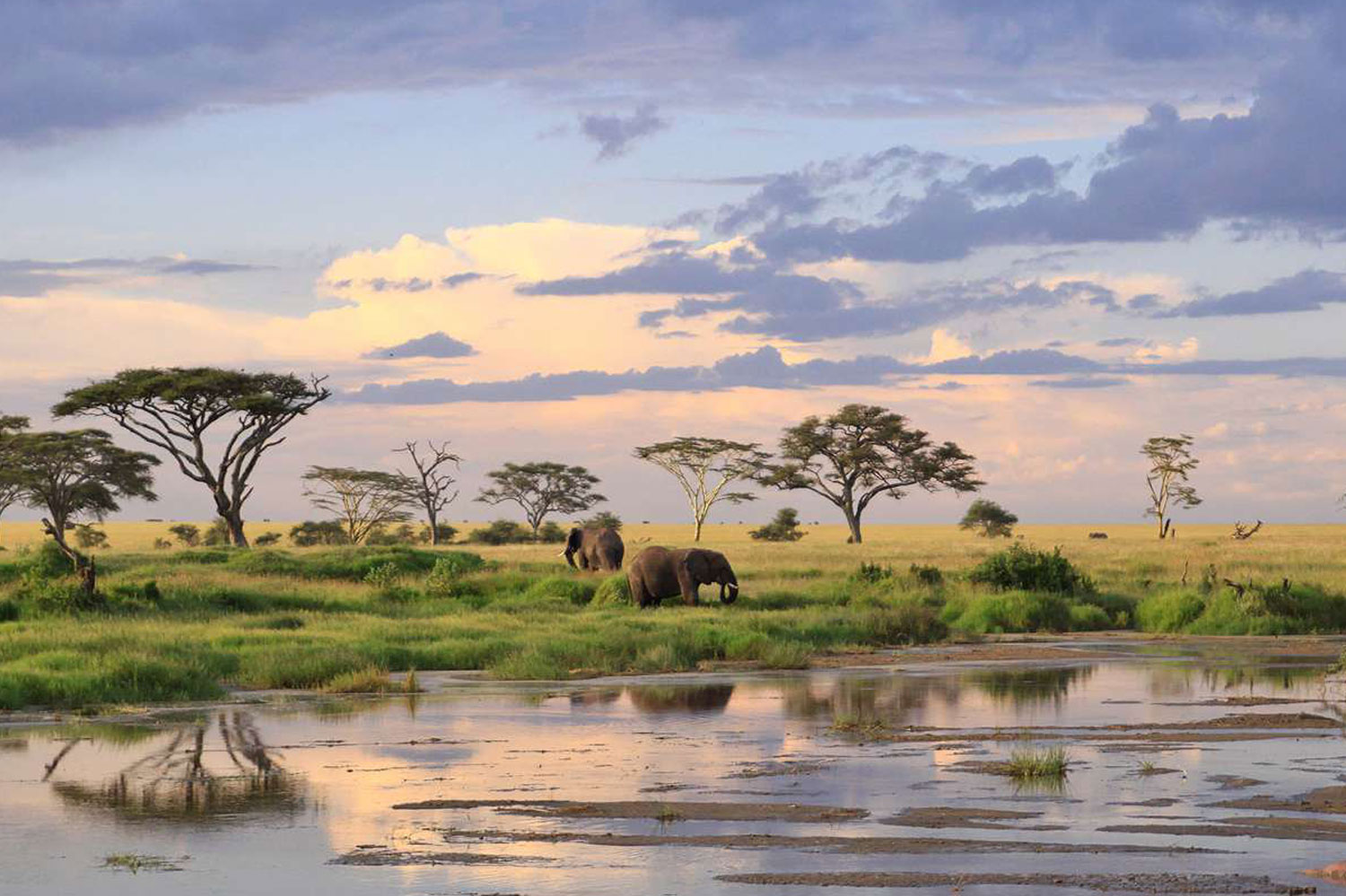
Ngorongoro Conservation Area
Famously known as Africa’s Garden of Eden, Ngorongoro Crater is one of Africa’s best natural wildlife habitats, Ngorongoro crater is one of the top destinations in the country to come close to rare black rhinoceros.
TANZANIA NORTHERN CIRCUIT ADVENTURE



Africa’s best natural wildlife habitats
Home to the sum of the Big Five, Ngorongoro is a natural wonder that needs to be seen to be believed.
It has been mentioned several times as among the 7 natural wonders of the world Nearby Empakai Crater is exceptional for hiking, while Oldupai Gorge is home to the Cradle of Mankind.
Other attractions within the rims of Ngorongoro Crater include Lake Ndutu (calving ground for the Wildebeest Migration), the active volcano of Ol Doinyo Lengai mountain, and the famed hippo pools.
Ngorongoro Crater and its surrounding landscape was shaped out of a volcano eruption creating the caldera that become a wilderness haven.
deep and majestic placed volcanic Crater
Ngorongoro Crater provides its visitors with an eye-catching scenery of a deep and majestic placed volcanic Crater, the world’s largest un-flooded and unbroken caldera. The Crater is a breathtaking natural sensation that covers 12 miles (19 km) across and 102 square miles (264 sq km) of wilderness. The edge of the crater landscape rises just over 2,000 feet (610 m) above the caldera bottom reaching an elevation of 7,500 feet (2,286 m).
Home to over 30,000 wildlife animal species
Ngorongoro Crater is also famously known as Africa’s Garden of Eden, and it is home to over 30,000 diverse wild animal species including wildebeests, buffaloes, elephants, lions, cheetahs, and the rare black rhinos.
Mankind’s earliest identifiable ancestors
Human presence inside Ngorongoro crater goes back beyond the dawn of history as proved by the numerous remains of hominids, mankind’s earliest identifiable ancestors.
The world’s two well-known pre-historic archaeological sites Gorge and Laetoli are inside the Ngorongoro conservation area. The Laetoli pronounce footprints of our remote ancient ancestors who lived in the area about 3.5 million years ago were found at the crater.